Transforming Workspaces: The Relationship Between Clutter Reduction and Productivity

Understanding the Impact of Workspace Organization
As businesses evolve in response to the demands of modern-day operations, the discourse around workspace organization and its correlation with employee productivity has gained significant traction. Cluttered workspaces are not merely an aesthetic issue; they can lead to tangible declines in efficiency, creativity, and employee satisfaction. Research from Princeton University suggests that physical clutter can actually impede the brain’s ability to focus and process information, confirming what many workers intuitively feel—the less clutter, the more clarity.
To illustrate the detrimental effects of clutter, it’s vital to break down some of the specific causes:
- Distractions: Excess items can scatter attention, making it difficult to concentrate on critical tasks. For instance, in a study conducted by the University of California, researchers found that employees working in organized environments were able to complete tasks 20% faster than their cluttered counterparts.
- Stress Levels: An environment filled with disarray can contribute to heightened anxiety. According to a survey by the American Psychological Association, over 60% of office workers expressed feelings of stress linked to their work environment, with clutter being a significant contributing factor.
- Time Wastage: The frustration of searching for misplaced items is a common phenomenon that many can relate to. A report by the National Association of Professional Organizers revealed that the average employee spends about 1.5 hours each week searching for lost items—time that could be better spent on productive tasks.
In contrast, the benefits of a well-organized workspace are manifold, spanning both individual and organizational success. Employees in tidy environments often experience:
- Improved Focus: With fewer distractions, clear surfaces lead to clearer thoughts. Workers in companies such as Google emphasize their luminous and minimalist workspace designs, which promote concentration and reduce cognitive overload.
- Creativity Boost: An orderly environment acts like a blank canvas, stimulating brainstorming and innovation. A survey conducted by Inc. magazine highlighted that 66% of employees in organized offices reported feeling more creative than those in disorganized spaces.
- Heightened Efficiency: When tools and resources are easy to find, workflows naturally improve, leading to shorter task execution times. For example, companies utilizing Lean management strategies have noted significant time savings due to efficient workspace organization, which has resulted in increased productivity metrics.
As we move forward, this article will explore the transformative effects of clutter reduction in the workplace. By analyzing practical strategies—such as adopting the 5S methodology from Lean manufacturing, incorporating technology for better organization, and creating a culture that values cleanliness—we aim to provide insights that could revolutionize your workspace. Through real-world examples and actionable solutions, discover how even minor adjustments can lead to significant improvements in productivity and employee satisfaction.
DISCOVER MORE: Click here to enhance your productivity
The Psychological Effects of Clutter on Performance
Understanding the psychological ramifications of a cluttered workspace is essential for comprehending the relationship between clutter reduction and productivity. When employees are surrounded by disordered environments, it can overwhelm their cognitive processes, leading to a range of negative outcomes. Research indicates that the human brain has limited capacity for processing information, and clutter can significantly reduce this capacity, leading to inefficient task completion and a potential decrease in the quality of work.
For instance, a study conducted by the University of Minnesota revealed that individuals working in disorganized conditions often experience diminished cognitive function, which in turn affects their decision-making capabilities. A disorganized desk, overflowing with documents and miscellaneous items, can mirror a busy mind filled with distractions. This chaotic state not only inhibits performance but also creates an environment where creativity struggles to flourish.
Benefits of Decluttering
On the flip side, embracing a cleaner workspace comes with several notable advantages that bolster productivity and employee morale. The act of decluttering can bring about an immediate sense of relief, helping employees to reclaim their focus and mental clarity. Some of the key benefits include:
- Enhanced Clarity: A tidy workspace promotes a clearer mental state, allowing employees to approach tasks with confidence and resolve. A clean desk can serve as a blank slate, reducing cognitive overload and allowing individuals to dive deeper into their assignments.
- Greater Motivation: An organized environment often serves as a motivational catalyst. Employees who work in clean and well-structured spaces typically exhibit a higher degree of enthusiasm towards their responsibilities, as the sense of order fosters a more positive work atmosphere.
- Stronger Team Collaboration: In open-plan offices, reduction of individual clutter can lead to improved collaboration among team members. Shared spaces tend to feel more welcoming and conducive to teamwork when they are organized, enabling seamless interaction and the sharing of ideas.
Another compelling statistic supports the benefits of decluttering: a survey by Office Team discovered that nearly 60% of employees find inspiration in organized spaces and feel a heightened sense of pride in their work environment. This foundational aspect emphasizes the necessity for businesses to prioritize workspace organization as part of their operational strategy.
The psychological groundwork laid by an organized workspace is formidable, demonstrating that the implications of clutter extend beyond mere aesthetics. Workspaces that encourage decluttering systematically become incubators of creativity and productivity. It’s clear that the journey towards transforming workspaces starts with addressing clutter—a step that, while seemingly simplistic, holds the potential to catalyze substantial improvements in performance and employee satisfaction.
| Advantages | Description |
|---|---|
| Enhanced Focus | Less clutter leads to reduced distractions, allowing individuals to concentrate better on their tasks. |
| Increased Efficiency | A tidy workspace simplifies finding documents and tools, significantly speeding up workflow. |
| Improved Mental Well-being | A clean environment can lead to reduced stress levels, fostering a healthier work-life balance. |
| Creativity Boost | Organized spaces can stimulate innovative thinking by creating an inviting atmosphere for ideas to flourish. |
The connection between decluttering workspaces and productivity is evident through these advantages. Research indicates that improved focus and efficiency naturally lead to heightened output levels. Furthermore, when employees feel psychologically at ease in a clean environment, their overall job performance reflects this positivity. Workplace organization, therefore, not only impacts personal effectiveness but also contributes to fostering a cohesive and collaborative team dynamic. Transforming workspaces by reducing clutter is a strategic endeavor that ties back to fundamental aspects of productivity optimization, making it a topic worth exploring further for those invested in workplace success.
Dive Deeper: Click here to discover minimalist organization tips
Implementing Decluttering Strategies in the Workplace
While the advantages of decluttering are clear, the challenge lies in implementing effective strategies that will encourage employees to embrace a more organized workspace. Organizations must foster a culture that values cleanliness and orderliness as integral to productivity. To facilitate this transformation, several practical tactics can be employed.
1. Establish Clear Organizational Systems
An initial step in clutter reduction involves creating defined organizational systems tailored to the unique needs of the office. Implementing a standardized filing system for both digital and physical documents can streamline processes, ensuring that employees can easily locate essential materials without sifting through clutter. Tools such as folders, labels, and dedicated storage solutions can help employees categorize their items efficiently, promoting a sense of order.
2. Encourage Regular Decluttering Sessions
Another effective strategy is to schedule regular decluttering sessions. Designating specific times, such as at the end or beginning of each week, allows employees to reflect on their work environment and make necessary adjustments. This practice not only helps individuals stay on top of their organization but also fosters a shared commitment among the team to uphold a tidy workspace. Making decluttering a communal value encourages collective ownership of the space.
3. Integrate Technology Wisely
Embracing technological solutions can significantly reduce physical clutter. Tools like cloud storage and project management software enable teams to share digital files and collaborate effectively without the need for piles of paperwork. By making a shift towards digital communication and data management, office environments benefit from reduced physical clutter, allowing employees to focus on their tasks with less distraction.
4. Promote Minimalism in Workspace Design
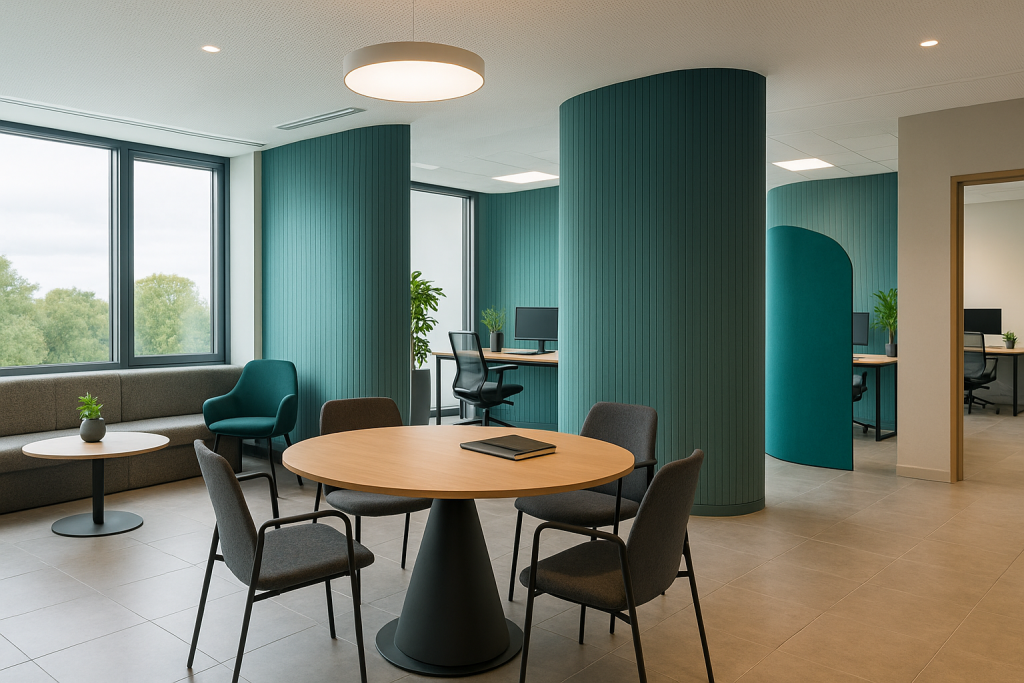
The layout and design of workspaces can significantly influence clutter levels. Companies are increasingly adopting minimalistic workspace designs that emphasize functionality over excess. Providing employees with the essentials, such as a comfortable desk, appropriate technology, and storage solutions, while encouraging them to personalize minimally can lead to a more organized atmosphere. Research shows that environments emphasizing minimalism generally increase productivity by allowing for a focused approach to work.
Moreover, involving employees in the design process can enhance their commitment to maintaining a tidy environment. When individuals feel included in the creation of their workspace, they tend to be more invested in keeping it organized and functional.
5. Provide Training and Resources
It is essential for organizations to offer training and resources that help employees understand the value of decluttering. Workshops focused on time management, productivity skills, and organization tactics can empower employees to take charge of their workspaces. By providing knowledge and the right tools, companies can equip their staff with the necessary skills to create and maintain organized environments, ultimately leading to improved productivity levels.
Implementing these decluttering strategies can produce a notable shift in workplace dynamics, deeply impacting employee engagement and overall productivity. By creating a culture that prioritizes a clutter-free environment, organizations lay the foundation for heightened performance, creativity, and employee satisfaction—all essential components for success in today’s competitive job market.
DISCOVER MORE: Click here to uncover effective strategies for a clutter-free life
Conclusion: Redefining Workspaces for Enhanced Productivity
In a landscape where workforce efficiency is paramount, the link between clutter reduction and productivity cannot be overlooked. The transformation of workspaces involves not only the physical organization but also a cultural shift that promotes an environment where creativity and focus thrive. By implementing robust decluttering strategies such as establishing clear organizational systems, encouraging regular tidying sessions, and utilizing technology effectively, organizations can significantly enhance employee performance.
Moreover, embracing minimalism in workspace design offers a unique opportunity to create an atmosphere that prioritizes functionality. When employees feel empowered to personalize their surroundings within a structured framework, they are more likely to take ownership of their environment, fostering a communal sense of responsibility. The provision of training and resources further equips teams with the necessary skills to maintain an orderly space, reinforcing the notion that a clutter-free environment is an essential component of productive work practices.
The implications of a clutter-free workspace extend beyond mere aesthetics; they echo deeply within the core of an organization. As companies in the United States and beyond recognize the value of decluttering, they find themselves not only enhancing employee satisfaction but also driving improved outcomes and increased innovation. By investing in the transformation of workspaces, organizations are laying the groundwork for a future where productivity flourishes in an organized, inspiring, and efficient environment. To remain competitive, businesses must embrace these changes, ultimately reshaping how work is approached in an ever-evolving professional world.