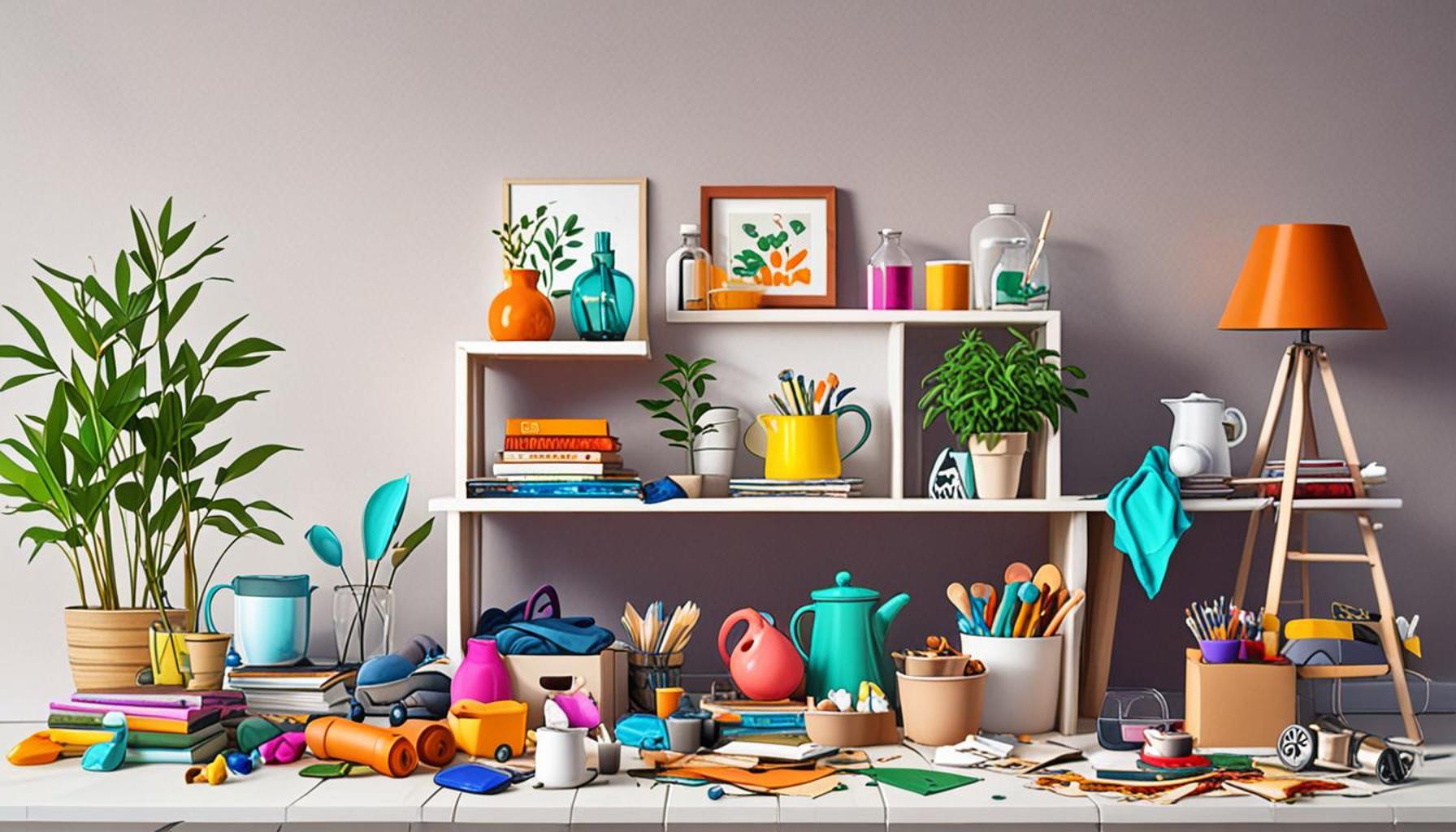
The Psychology of Order: How Decluttering Can Enhance Your Creativity

Unleashing Potential Through Organized Spaces
Have you ever walked into a room filled with clutter and felt an immediate sense of overwhelm? In contrast, stepping into a clean, organized space can invigorate your senses and spark new ideas. The psychology of order suggests that our environments have a profound influence on our cognitive functions. When you declutter your surroundings, you’re not only tidying up but also paving the way for improved mental clarity and enhanced creative expression.
Consider how elements like distraction, clarity, and motivation play pivotal roles in our creative processes. Here are several ways decluttering can positively affect creativity:
- Reduction of distractions – A clean space reduces visual noise, allowing your mind to concentrate on your current project instead of being sidetracked by scattered items. This focus is essential when brainstorming new ideas or problem-solving.
- Increased mental clarity – When extraneous objects are eliminated, your thoughts can flow unrestricted. This clarity can lead to breakthrough moments where inspiration strikes, often while working in a well-structured environment.
- Boosted motivation – A tidy workspace can energize you and encourage engagement with creative activities. For instance, a well-organized studio can reignite passion for painting or crafting, making it easier to dive into projects without hesitation.
Research supports the notion that those who regularly practice decluttering report not only heightened creativity but also increased productivity. A study published in the journal “Psychological Science” indicated that individuals in orderly environments performed more effectively than those surrounded by chaos. This finding emphasizes the intrinsic relationship between our physical spaces and our capacity to innovate.
Practical steps to declutter your space can vary based on personal style and needs. For instance, the “two-minute rule” suggests that if a task takes less than two minutes to complete, do it immediately. This approach can prevent small messes from accumulating and creating larger obstacles down the line. Furthermore, consider the one-in-one-out rule, which advocates for letting go of one item for each new one you bring into your environment. This method is especially useful in preventing future clutter and maintaining balance.
As you explore these concepts, take a moment to assess your own creative space. Are there items that no longer serve a purpose? Could a small organizational project reinvigorate your passion for a hobby? Engaging with your environment through the lens of creativity and order might just unlock your next great idea.

DISCOVER MORE: Click here for optimization strategies
The Impact of Clutter on Mental Processing
Our minds thrive in environments that reflect clarity and purpose. When faced with a chaotic space, the brain grapples with multiple competing inputs, leading to a state known as cognitive overload. This phenomenon can stifle creative thinking and hinder problem-solving abilities. In contrast, a well-organized environment promotes a sense of calm and simplicity, encouraging thoughtful engagement with our tasks. Researchers have long explored this relationship between clutter and creativity, revealing that individuals in tidy settings experience significant benefits in their cognitive performance.
For instance, a study led by researchers at Princeton University found that physical clutter in one’s surroundings can cause increased distraction and decreased focus on tasks. Conversely, structured spaces allowed for heightened attention and productivity. Participants engaged in creative tasks under controlled environments reported feeling more inspired and capable of generating novel ideas, reinforcing the assertion that the state of our surroundings directly impacts our creative output.
In light of this evidence, it becomes increasingly vital to examine how specific strategies can facilitate the process of decluttering. Below are several effective methods to help reclaim your space and, ultimately, your creative potential:
- Prioritize Functionality – Begin by identifying what items are essential for your creative work and eliminate those that do not serve a purpose. Tools and materials that are frequently used should be easily accessible, while those that are rarely utilized can be stored away or discarded.
- Establish Zones – Creating designated areas for different activities (e.g., reading, painting, writing) can help maintain organization and facilitate flow between tasks. This zoning method prevents cross-contamination of ideas, allowing for deeper immersion into each creative process.
- Schedule Decluttering Sessions – Regularly allocating time to sort through your possessions and re-evaluate their relevance can help prevent the gradual accumulation of clutter. Setting a recurring weekly or monthly appointment can make this practice a manageable part of your routine.
The idea of decluttering transcends merely creating physical space; it embodies the liberation of mental capacity. This release can trigger a wave of newfound creativity, allowing hidden thoughts and ideas to surface. As you embark on your decluttering journey, remember that the act itself is not merely about getting rid of things—it signifies a commitment to nurturing your creative self.
Curious about how this liberating process can manifest in your own life? As you delve deeper into the art of decluttering, you may be surprised at the creative avenues that open up, beckoning you to explore and innovate in ways you never thought possible.
The Benefits of Decluttering for Creativity
Decluttering is not merely a task; it is a psychological process that can yield significant benefits for creativity. When individuals engage in the act of decluttering, they often experience a sense of liberation that allows their mind to wander more freely. By organizing their physical space, they also cultivate a mental environment that encourages idea generation and focus. Clutter can create a sense of chaos that hampers cognitive function, while a well-ordered space can enhance clarity and boost creative thinking.Moreover, a decluttered environment is linked to improved emotional well-being, which is essential for creativity. When a person feels overwhelmed by their surroundings, it can lead to stress and anxiety, stifling creative thought. On the other hand, reducing clutter can lower these stress levels, fostering a more positive ambiance conducive to innovation. This process often leads individuals to see their work and creative projects in a new light, helping them approach tasks with fresh perspectives.Research indicates that decluttering can spark new connections in the brain. As you clear away distractions, your mind is free to focus on making associations between ideas, ultimately enhancing problem-solving and creative skills. This improves not just artistic output but also boosts productivity across various fields. As individuals experience these benefits, it cultivates a deeper understanding of order’s psychological impact, prompting them to reevaluate their physical and mental spaces to maximize their creative potential.
| Benefits of Decluttering | Impact on Creativity |
|---|---|
| Reduction of Stress Levels | Creates a Calm Environment |
| Enhanced Focus | Improves Cognitive Function |
| Promotes New Ideas | Fosters Innovative Thinking |
Understanding how to utilize the advantages of decluttering can empower individuals to enhance their creative abilities. Embracing this aspect of the psychology of order may require courage, as it involves confronting one’s possessions and the emotional ties that come with them. However, the reward—a liberated mind ready for creativity—is certainly worth the effort. As creative thinkers continue to explore this relationship, they will undoubtedly discover more methods to integrate decluttering practices into their daily routines and workspaces.
DIVE DEEPER: Click here to discover more
Unlocking Creativity through Rituals and Mindfulness
Decluttering creates an opportunity for not just physical space but also for mental rejuvenation. One effective approach to harness this newfound energy is through implementing rituals and mindfulness practices that complement the decluttering process. By consciously engaging with your environment, you can establish deeper connections with your tasks, fostering a fertile ground for creativity to flourish.
Mindful Decluttering invites individuals to cultivate awareness during the decluttering process. Instead of hastily throwing away items, one can reflect on the purpose and emotional attachment to each piece. This practice of mindfulness helps clarify what truly matters—ideas that may have been buried under layers of clutter begin to resurface. A 2019 study published in the journal Psychology of Aesthetics, Creativity, and the Arts emphasized that individuals who practice mindfulness are better equipped to explore unique solutions and unconventional perspectives, significantly enhancing their creative output. Moreover, the tranquil nature of mindfulness brings a sense of peace that is often conducive to generating creative ideas.
Incorporating rituals into your creative routine can further cement the benefits of decluttering. Establishing a specific ritual around your creative processes—be it lighting a candle, playing music, or sipping your favorite tea—can help signal to your brain that it’s time to shift into the creative mindset. A well-defined ritual can act as a bridge between the state of a decluttered environment and the act of creation itself. For instance, acclaimed author Haruki Murakami is known to maintain a strict daily routine that includes exercise and writing at specific times, allowing him to summon inspiration seamlessly. This kind of structure can encourage the subconscious mind to remain engaged, prompting creative thoughts to emerge more readily.
Furthermore, engaging in creative hobbies outside of your primary focus has been shown to enhance overall creativity. When you declutter your space, you may find ways to explore new forms of creativity without the weight of excess belongings holding you back. Activities such as gardening, crafting, photography, or cooking can serve as an outlet for expressing original ideas and concepts. A study published by the American Psychological Association indicated that individuals who engage in varied artistic activities tend to develop richer, more nuanced perspectives in their primary creative endeavors. Simply put, embracing multiple creative pursuits can widen your mental bandwidth and lead to innovative breakthroughs.
It’s essential to also recognize the role of environmental aesthetics in stimulating creativity. Research shows that the ambiance of your workspace has a tangible effect on your mood and creative inclination. Soft colors, natural light, and elements of nature can lead to increased feelings of happiness and relaxation, allowing for broader thinking. As you declutter, consider how you can enhance your space through thoughtful decor and organizational strategies that speak to your creative identity. For example, incorporating elements such as plants not only beautifies your environment but also leads to improved air quality and cognitive function, resulting in higher creative output.
As you delve into these practices, consider how each element plays a vital role in constructing an ideal atmosphere for ideation. The journey toward embracing a decluttered, aesthetically pleasing space complements the psychological need for order, compelling your mind to explore creativity in ways that are both spontaneous and inspired.
DISCOVER MORE: Click here to learn about mindfulness in minimalist living
Embracing Order for Enhanced Creativity
In conclusion, the intersection of decluttering and creativity offers a compelling insight into how the human mind operates in pursuit of inspiration and innovation. As we’ve explored, creating a clean and organized space not only frees physical clutter but also liberates mental bandwidth, allowing for fresh ideas to emerge and flourish. Through mindfulness in the decluttering process, individuals can reconnect with their belongings and values, ultimately rediscovering their own creative potential.
Moreover, establishing rituals around creative endeavors transforms the act of creation into a sacred space—one that signals to the mind the time for innovation. Engaging in diverse creative hobbies enriches this space, offering reservoirs of inspiration from which to draw. Statistics show that variety in creative outlets can lead to greater cognitive flexibility, enabling individuals to solve problems from multiple angles and ultimately enhancing their primary areas of focus.
Lastly, the impact of environmental aesthetics cannot be overlooked. By thoughtfully curating surroundings that inspire, individuals can prime their minds for a state of creativity that is both productive and fulfilling. In this light, decluttering emerges not just as a mundane chore but as a profound psychological practice, inviting individuals to explore the vast landscapes of their imagination. As we tread this path of order, we find ourselves not only clearer in our thoughts but also more dynamic in our creative pursuits, illustrating that a tidy space paves the way for an infinite realm of possibilities.